
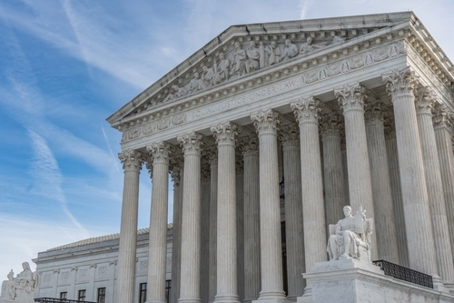
On August 4, Kansas voters rejected a constitutional amendment that would have scrapped the state's merit-based system for selecting Supreme Court justices in favor of direct, partisan elections. The measure failed by a wide margin, with the Kansas Secretary of State's Office reporting a vote of roughly 61 percent to 39 percent against the change.
David Morantz, a partner at Shamberg, Johnson & Bergman, is a member of Kansas United for Impartial Courts (KUIC) and helped lead the campaign that defeated the amendment.
How Kansas Selects Its Supreme Court Justices
Kansas has used a merit selection process for the Supreme Court since 1958. A nine-member nominating commission, made up of five lawyers and four non-lawyers from across the state, reviews applicants and sends three finalists to the governor, who appoints one. New justices then face a retention vote at the next general election, giving Kansans a direct say without opening the seat to a partisan campaign.
The amendment referred to voters by the Republican-controlled Legislature would have replaced that system with statewide elections for Supreme Court seats, similar to races for other elected offices. Candidates would have raised money, run campaigns, and answered to party organizations and donors rather than facing a nominating commission built to screen for qualifications.
David Morantz's Role in the Campaign
David has spent his career representing injured Kansans in state and federal court, including arguments before the Kansas Court of Appeals and the Kansas Supreme Court. He served as president of the Kansas Trial Lawyers Association from 2019 to 2020 and currently sits on the National Center for State Courts Lawyers Committee, where he meets regularly with chief justices and state court leaders on issues including judicial independence. Before law school, he worked as a newspaper reporter covering courts for the Associated Press and the Omaha World-Herald.
That background put him in a position to help lead KUIC's campaign against the amendment, working alongside members of Kansas's legal community to explain what a switch to partisan elections would mean for the state's courts. Following the vote, David noted in a KUIC press release:
"Our Kansas Supreme Court Justices have followed the Constitution to protect our rights, uphold the rule of law, and ensure every Kansan receives a fair hearing. This amendment was an effort to punish them for doing their jobs and replace constitutional judgment with partisan pressure. Tonight, Kansans rejected that power grab pushed by billionaire political donors. I'm grateful to the hundreds of members of Kansas's legal community and every Kansan who made their voice heard to defend judicial independence and the rule of law."
Protecting Kansas Courts From Political Money
Judicial elections in other states show what was at stake. In a recent Wisconsin Supreme Court race, outside spending on a single seat topped $90 million, much of it from donors with cases or interests likely to come before the court. Kansas's merit selection system was built specifically to keep that kind of money out of who sits on the bench.
Keeping the current system in place means Supreme Court justices continue to be chosen for their qualifications rather than their fundraising or party backing, and Kansans keep their existing role in retention elections rather than trading it for a system where campaign donors carry more weight than voters.
David and our team at Shamberg, Johnson & Bergman remain committed to a fair, independent court system for every Kansan. Questions about our attorneys or our work in the community can be directed to (816) 542-5999.